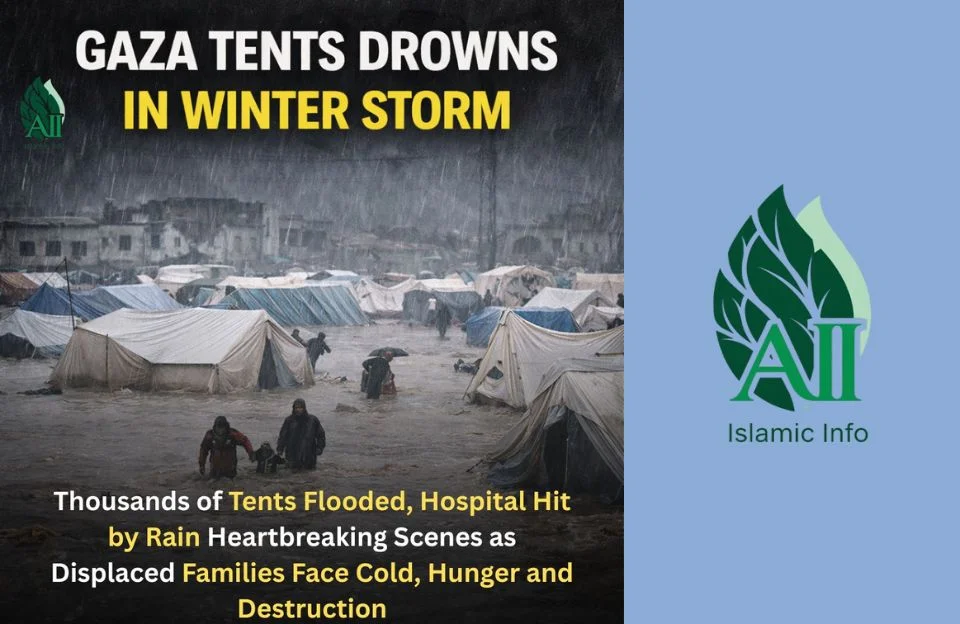
Gaza Tents Drowns in Winter Storm, thousands of Tents Flooded, Hospital Hit by Rain
Winter Storm Devastates Gaza as Floodwaters Submerge Tents and Hospital
A powerful winter weather system swept across the Gaza Strip early Tuesday, bringing torrential rain and strong winds that flooded thousands of tents housing displaced Palestinians and disrupted operations at a major hospital.
Reports from the Türkiye-based Anadolu Agency reveal that rainwater seeped into several sections of Al-Shifa Hospital in Gaza City, including the emergency and reception areas, forcing medical staff to halt or delay critical services. Al-Shifa, Gaza’s largest medical facility, has already suffered extensive damage from repeated Israeli strikes over the past two years, leaving it extremely vulnerable to severe weather.
Despite a ceasefire agreement, efforts by Gaza’s Health Ministry to restore damaged medical infrastructure have stalled due to continued restrictions on the entry of essential equipment and supplies.
Tents Washed Away as Families Left Exposed
Witnesses across the Gaza Strip described widespread destruction in displacement camps. Thousands of tents were flooded, while many were ripped apart or blown away entirely by fierce winds that began Monday evening.
Khaled Abdel Aziz, a displaced resident, told Anadolu Agency that his family woke to violent gusts shaking their tent. “We tried to hold it down, but the wind tore it apart. Everything we owned was swept away,” he said. “Now we are sitting in the rain with our children. There is nowhere to go.”
In Gaza City, families sought refuge beneath the remains of bombed-out buildings, while in the southern town of Khan Younis, mothers like Maha Abu Jazar were seen running through floodwaters as their tents became completely submerged.
Collapse Risk Looms Over Damaged Homes
Gaza Civil Defense spokesperson Mahmoud Basal warned that thousands of partially destroyed homes are at imminent risk of collapse due to heavy rainfall and strong winds. “These structures are a deadly threat to hundreds of thousands of people who have no alternative shelter,” Basal said, adding that repeated international warnings have gone unanswered.
Jabalia Mayor Mazen al-Najjar said the storm struck a population already living in extreme hardship. Over 90% of buildings and roads in northern Gaza have been destroyed, forcing residents into worn and inadequate tents. He noted that collapsed infrastructure caused immediate flooding and sewage overflow as the storm began.
Najjar stressed that local authorities and aid organizations are overwhelmed and unable to meet the growing humanitarian needs. He urged the international community to urgently deploy mobile housing units, establish safe camps, and restore water and sewage systems.
Ongoing Humanitarian Crisis
Last week alone, a winter storm claimed at least 14 lives in Gaza. More than 53,000 displacement tents were damaged or destroyed, and 13 buildings collapsed across the territory. Civil Defense officials estimate that nearly 250,000 families are currently living in displacement camps, many exposed to cold, flooding, and unsafe conditions.
Although a ceasefire came into effect on October 10, living conditions have continued to deteriorate. Aid groups report that restrictions on humanitarian access remain in place, violating agreed protocols.
Since October 2023, Israeli attacks on Gaza have killed more than 70,600 people, most of them women and children, and injured over 171,000 others, deepening one of the world’s most severe humanitarian crises.